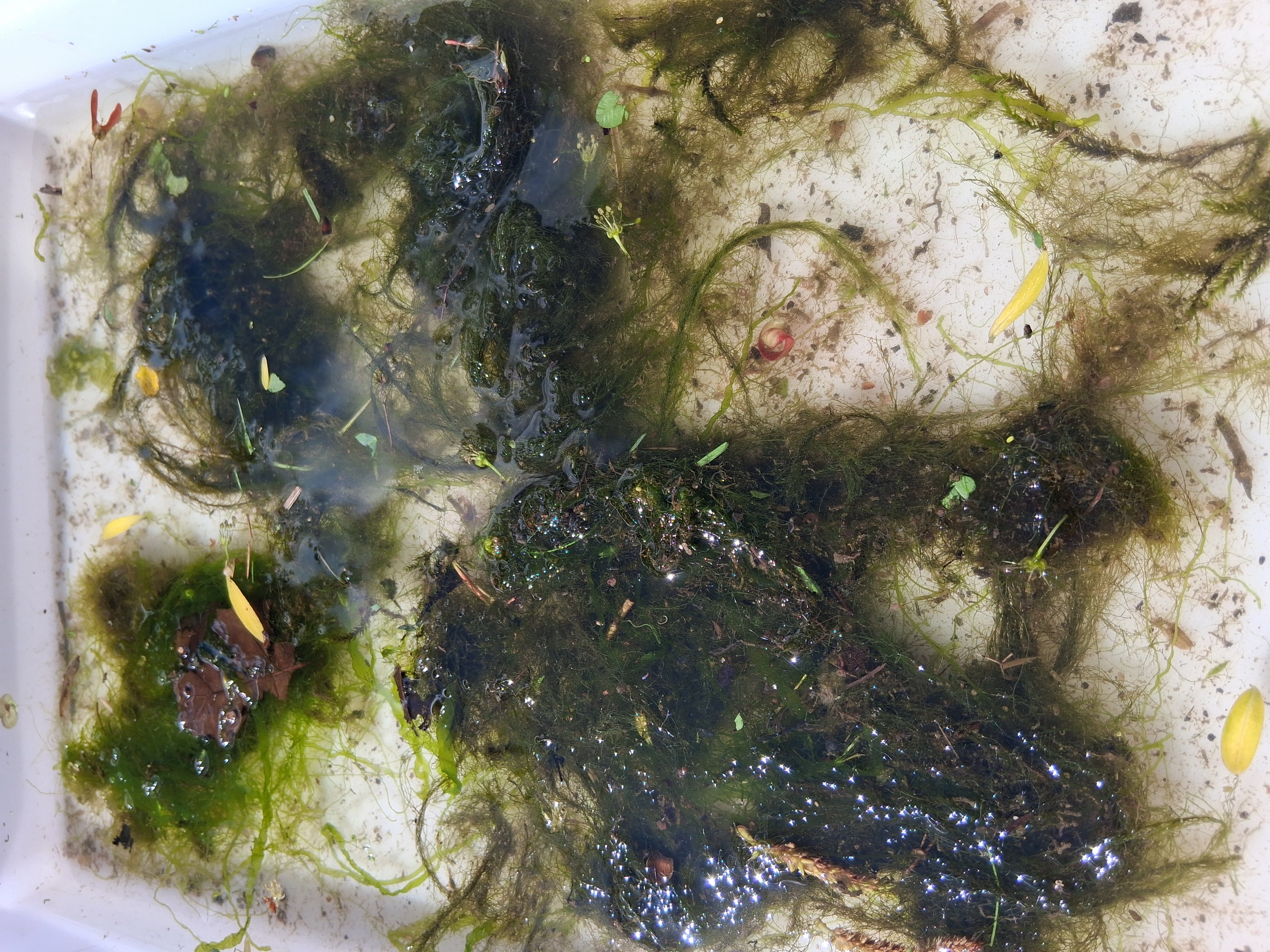
Algae are a natural part of all rivers, regardless of their condition. In most cases they are part of a healthy ecosystem. However, there are situations when very large amounts of algae have the potential to cause problems for other organisms, such as invertebrates and fish. For example, extensive growth of filamentous algae can lead to oxygen fluctuations in the water, and potentially, night time anoxia (depletion of oxygen).
RAPPER-CS (Rapid Assessment of PeriPhyton in Rivers for citizen scientists) is a nationally-standardised monitoring technique for filamentous algae. Volunteers examine the algae visible on the river bed to determine the types of algae present (nutrient sensitive vs tolerant) and their extent (percent cover and thickness).
This monitoring method is used to quickly determine whether a section of watercourse is likely to be subject to eutrophication pressures (excessively high levels of nutrients).
For more details on the methodology check out this overview.
If you would like to become trained in using this survey methodology, get in touch with our volunteer coordinator, Erica, at echapman@tweedfoundation.org.uk