Have you ever wondered how healthy your local river is?
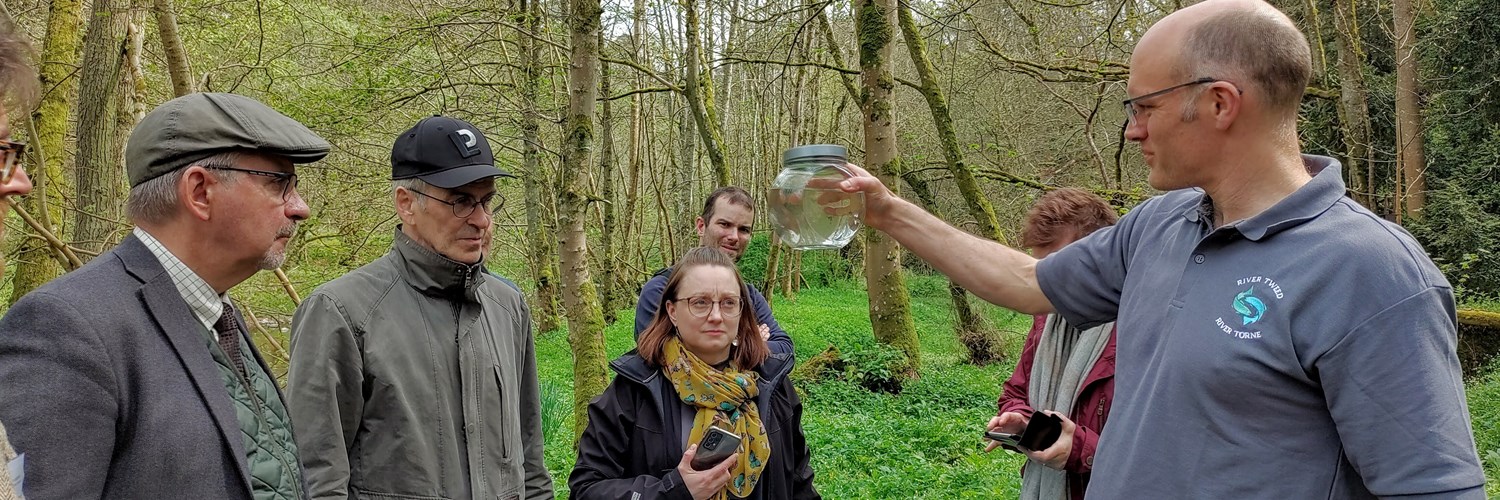
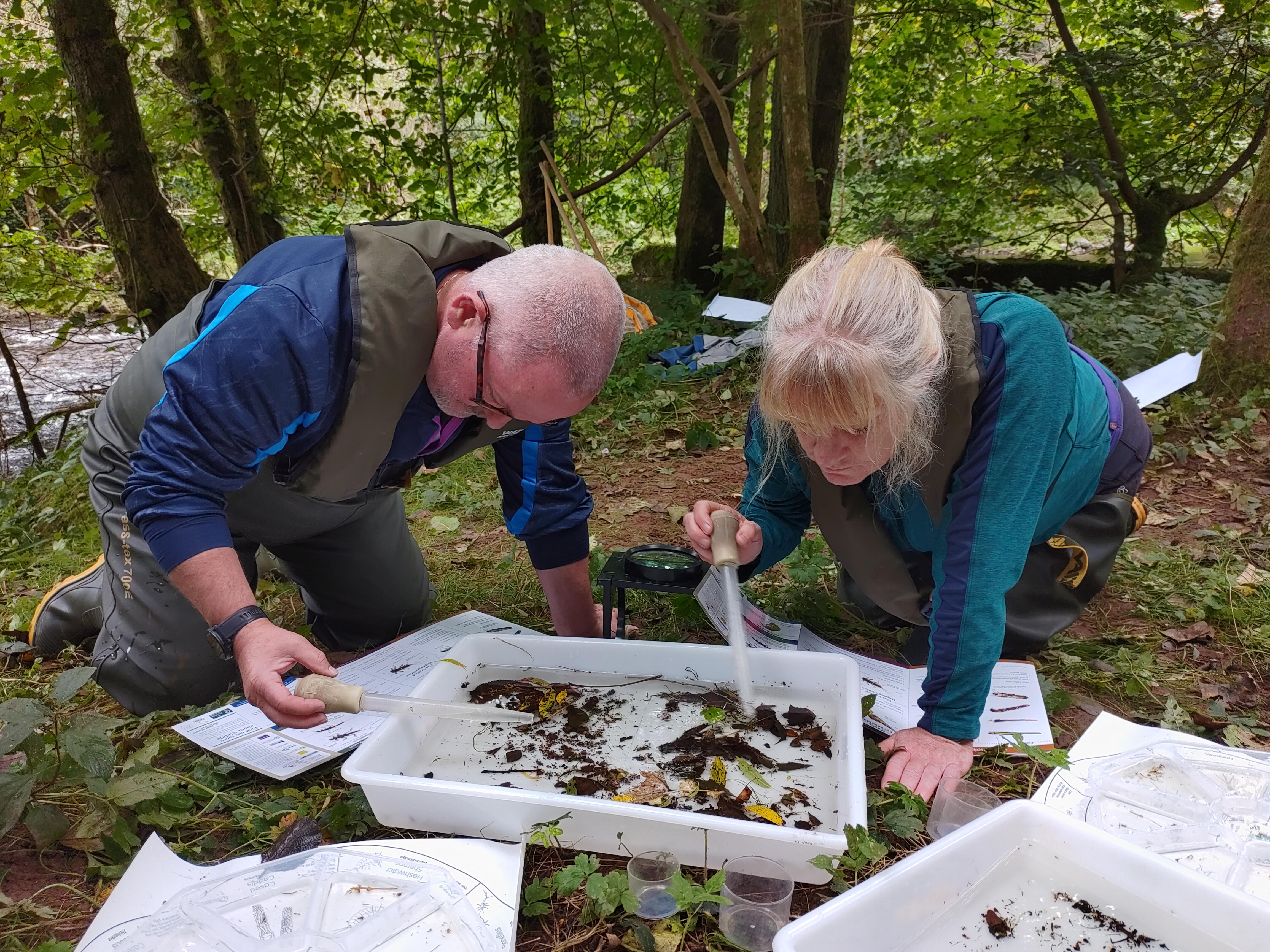
Invertebrate sampling is a great way for you to find out. Using invertebrates collected from our rivers, known as riverflies, we can monitor water quality and highlight any pollution concerns.
Guardians of the Tweed survey sites once a month from April to October throughout the Tweed and Eye catchments using standardised kick sampling methodology. Check out our story maps for more details on what is involved, FAQs, and previous results (this is best viewed on a larger screen).
Free training and equipment are provided for individuals or groups to become citizen scientists and carry out these surveys.
The Tweed Foundation coordinates this work as a Riverfly Partnership Riverfly Monitoring Initiative (RMI) hub through Buglife.
Riverfly monitoring is open to anyone with any level of knowledge; anglers, ecologists, or newcomers to the natural world are welcome to participate.
If you are interested in joining a group or want to get your own group set-up please get in touch with our volunteer coordinator, Erica, at echapman@tweedfoundation.org.uk
Upcoming training
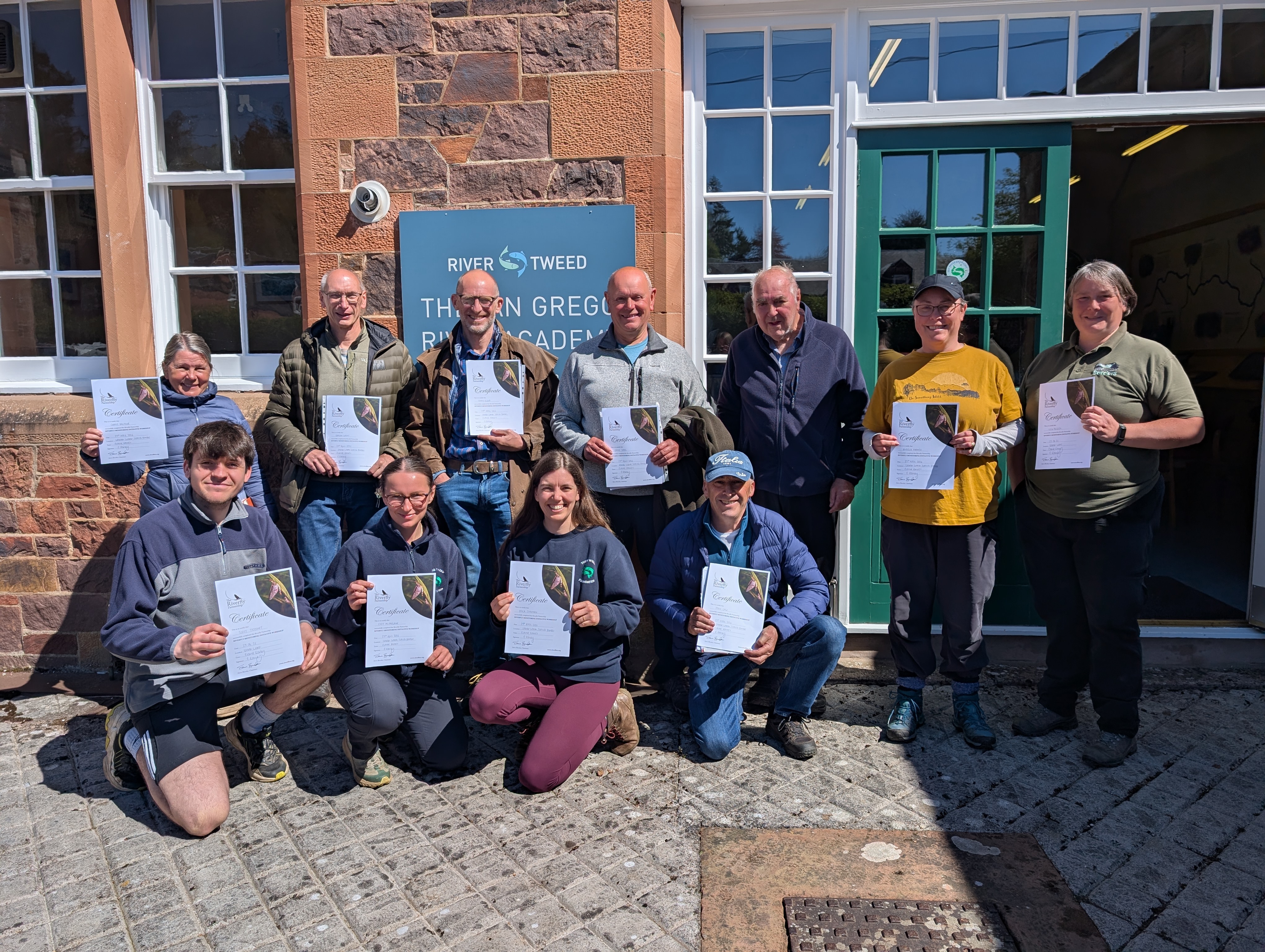
There are two components to the Riverfly Monitoring Initiative (RMI) training, theory and practical. These can be done together or separately. The Tweed Foundation of this training free of charge for volunteers looking to monitor in the River Tweed or Eye Water catchments.
If you have a group, let us know, and we can discuss training options at a location and time convenient for you. Even if you do not have a group let us know where you are and we can plan training sessions around demand. You can do this by completing our volunteer registration form.
Our next combined (theory and practical session) will be 10am-5pm on Tuesday 15 September in Norham. You can register here. If you have already attending an online theory session with Buglife, it is possible to attend just the practical portion of the course.
Check back next year for next season's training sessions or to stay up to date, sign-up for our volunteer newsletter.
If you have any questions please don’t hesitate to contact our volunteer coordinator, Erica at echapman@tweedfoundation.org.uk or 01896 848 271
Feedback from our training courses
"Just another thank you for the training this morning, great to learn more and meet everyone. Look forward to getting involved"
"Thank you for hosting the training sessions and I'm excited to see what data we'll get from the new site"
"It was a brilliant session. Can't wait to put it all into practice"

Preserved Macroinvertebrate Samples
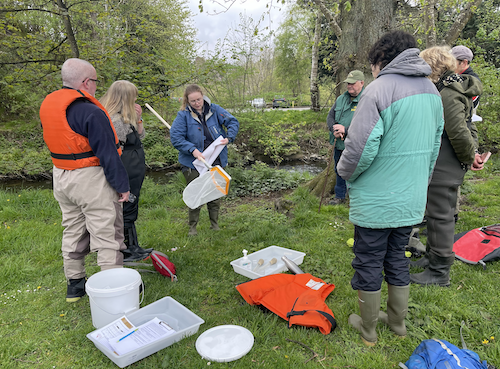
Using the same field method of kick sampling, Tweed Foundation biologists also collect and preserve macroinvertebrate samples, which includes riverflies, as part of our environmental consultancy services.
During the winter months these samples are processed. This involves sifting through water samples to remove all the animals. Animals are then identified to family level. This is a time consuming but interesting processes, and we would love your help. If you have an interest in seeing what lives in our rivers and have some time to spare let us know. No previous experience is needed, just decent eyesight (glasses allowed) and good fine motor skills. You can help for as little or as much as you would like. If you are interested send our volunteer coordinator an email at echapman@tweedfoundation.org.uk